Many cat owners have felt their hearts flutter from their feline friends’ persistent, meticulous licks:
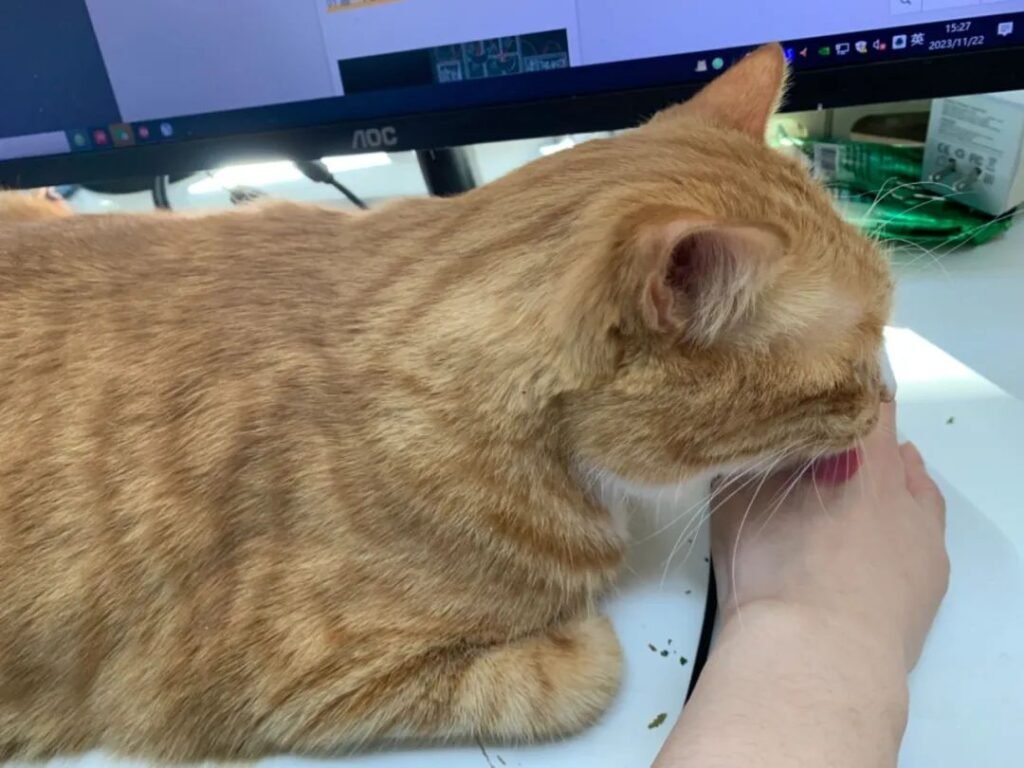
Is it saying it likes me? Could it be giving me a cat kiss? Could it be… that it’s fallen head over heels for me?
Unfortunately, the answer might disappoint you.
When cats lick you, it’s highly unlikely for the romantic reasons you imagine.
Licking you could mean—they approve of your behavior.
In the feline world, mutual grooming is a vital social ritual. Through this exchange of scents, cats deepen mutual understanding and strengthen bonds, reducing friction and conflict within their group.
Therefore, when a cat willingly licks you, it often means it sees you as “one of its own,” expressing acceptance and closeness in the most feline way possible.
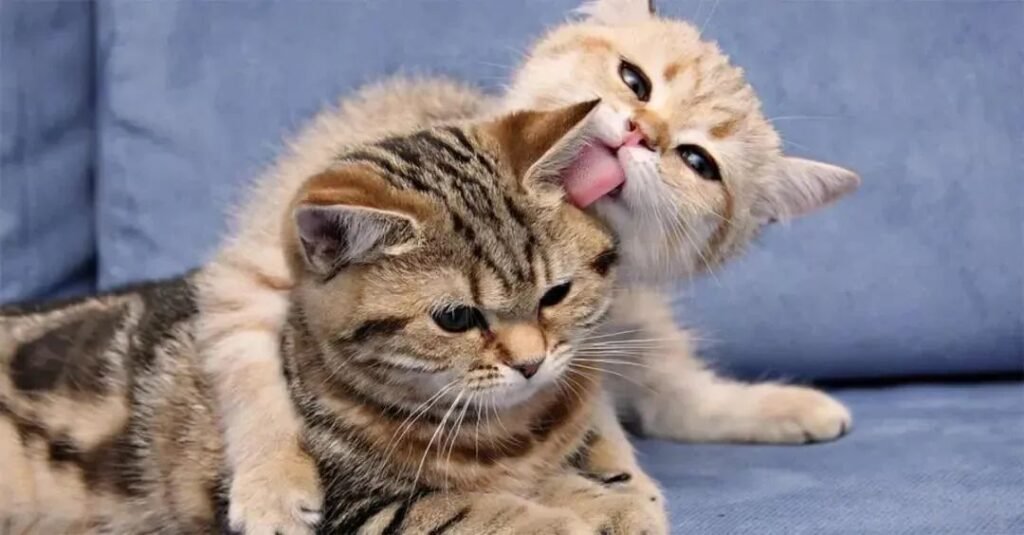
However, there’s also a “status symbol” within cat groups: higher-ranking cats often groom other members more frequently. So when your cat licks you, it might be silently declaring—“you’re my little protégé under my wing.”
Licking you might also mean—they’re obsessed with your scent
Human sweat contains salts, trace elements, and oils that can sometimes be irresistibly appealing to cats. (This explains why some cats are particularly fond of “strong-smelling” spots like shoes, sweaty feet, or armpits.)
Of course, if you’ve just enjoyed roast chicken or fried fish and your fingers still carry the scent, the cat’s motivation for licking you is pretty obvious.
Additionally, certain ingredients in creams or ointments you apply to your skin may pique a cat’s curiosity and appeal to them. (Note: Some ingredients can be harmful to cats, so use caution.)
Licking you could also be—a signal to soothe anxiety
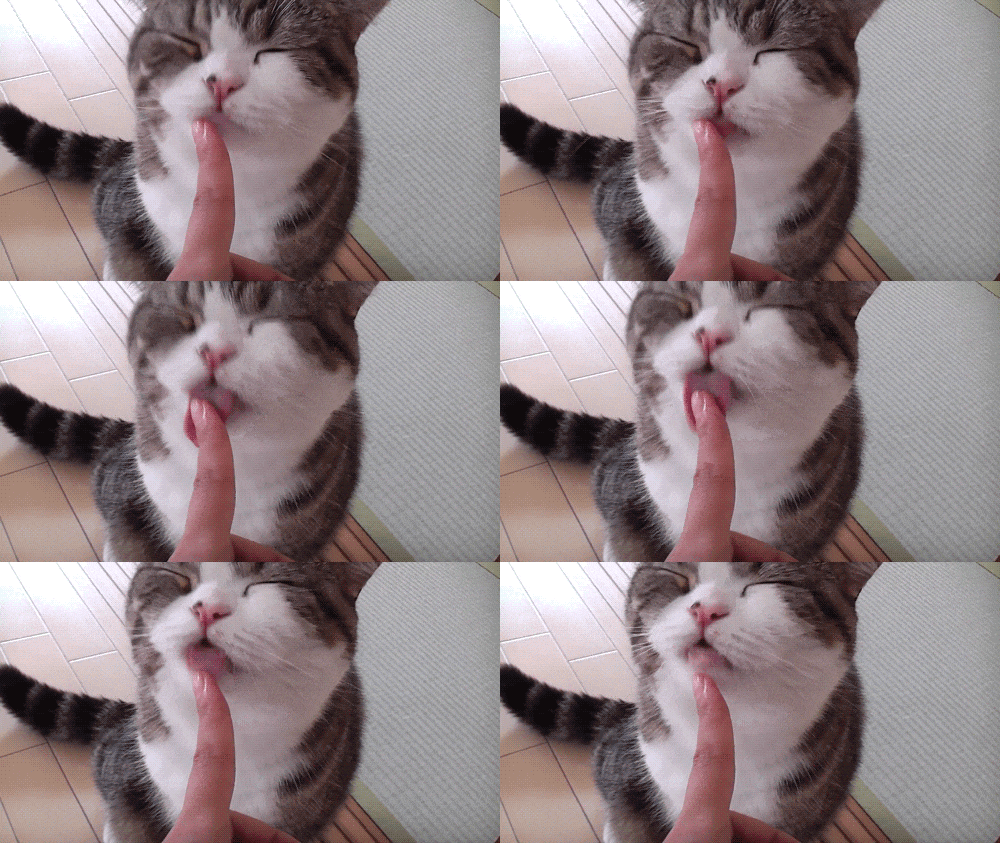
When interacting with humans, if cats feel tense or uncomfortable, they may lick people to calm themselves.
This behavior is somewhat akin to humans biting their nails when anxious—a form of self-soothing.
Therefore, when your cat licks you, pay attention to the frequency and context of its actions to discern whether it stems from affection or anxiety.
If the licking becomes “too much to handle,” you might try…
Despite the “affection,” that prickly, itchy, and sometimes even slightly painful sensation leaves many cat owners feeling overwhelmed.
In such moments, consider these gentle ways to politely decline:
Distract them with toys or treats;
Enrich the home environment with cat trees, puzzle toys, etc., to reduce licking caused by boredom or separation anxiety;
Pick up a comb and groom it—this acknowledges its affection while potentially immersing it in the comfort of being brushed, naturally distracting it from continuing to lick you.